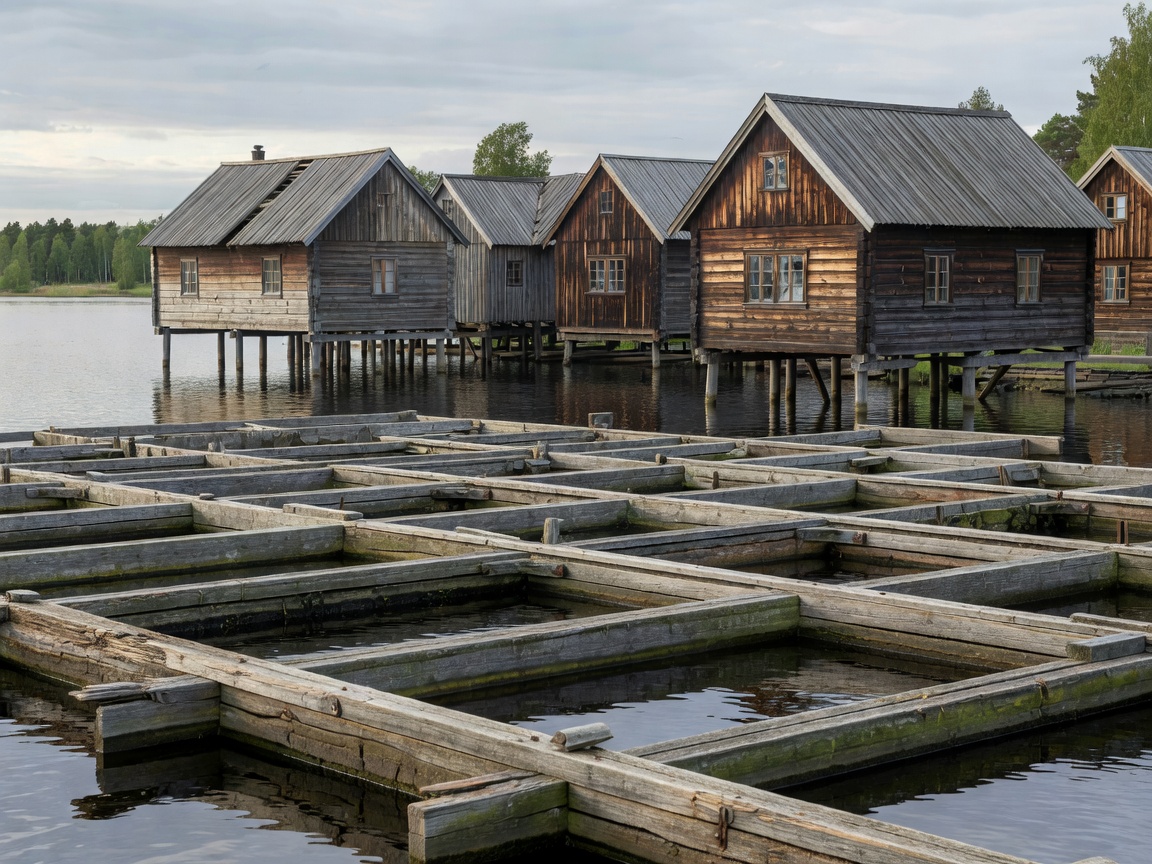
Fetsund Lenser on the Glomma: Europe's foremost preserved log-sorting facility, active from 1861 until 1985.
Timber Floating (Fløting): The Boreal Highway
For centuries, the Glomma functioned as Norway's primary highway for timber extraction. The vast pine and spruce forests of Østerdalen were geographically isolated from ocean shipping lanes by rugged topography. The river provided the only viable, cost-effective mechanism for transporting millions of harvested logs downstream to coastal export ports.
Winter logging operations felled massive logs that were skidded over snow by horses to frozen riverbanks. When the spring melt arrived in May, the logs were rolled into the raging floodwaters. Skilled timber drivers (tømmerfløtere) risked life and limb balanced on moving tree trunks, equipped with long spiked poles (fløterhaker) to break up logjams at rapids, rocks, and narrow bridge piers.
Fetsund Lenser: Engineering the River Sorting Works
The operational bottleneck of the entire timber trade sat at Fetsund, directly north of Lake Øyeren. Here, the river broadened and slowed, making it possible to capture the free-floating logs with chains and wooden pontoon barriers known as booms (lenser).
At Fetsund Lenser, founded in 1861, hundreds of workers sorted logs according to company brand marks stamped into the ends of each trunk. Once sorted, the timber was bundled into large rafts and towed across Lake Øyeren by steamboats to the sawmills and paper plants at Sarpsborg and Fredrikstad. During peak years in the mid-twentieth century, up to 14 million logs passed through Fetsund annually. Log driving on the Glomma officially ceased in 1985 when modern heavy transport trucks proved more predictable, marking the end of a multi-century tradition.
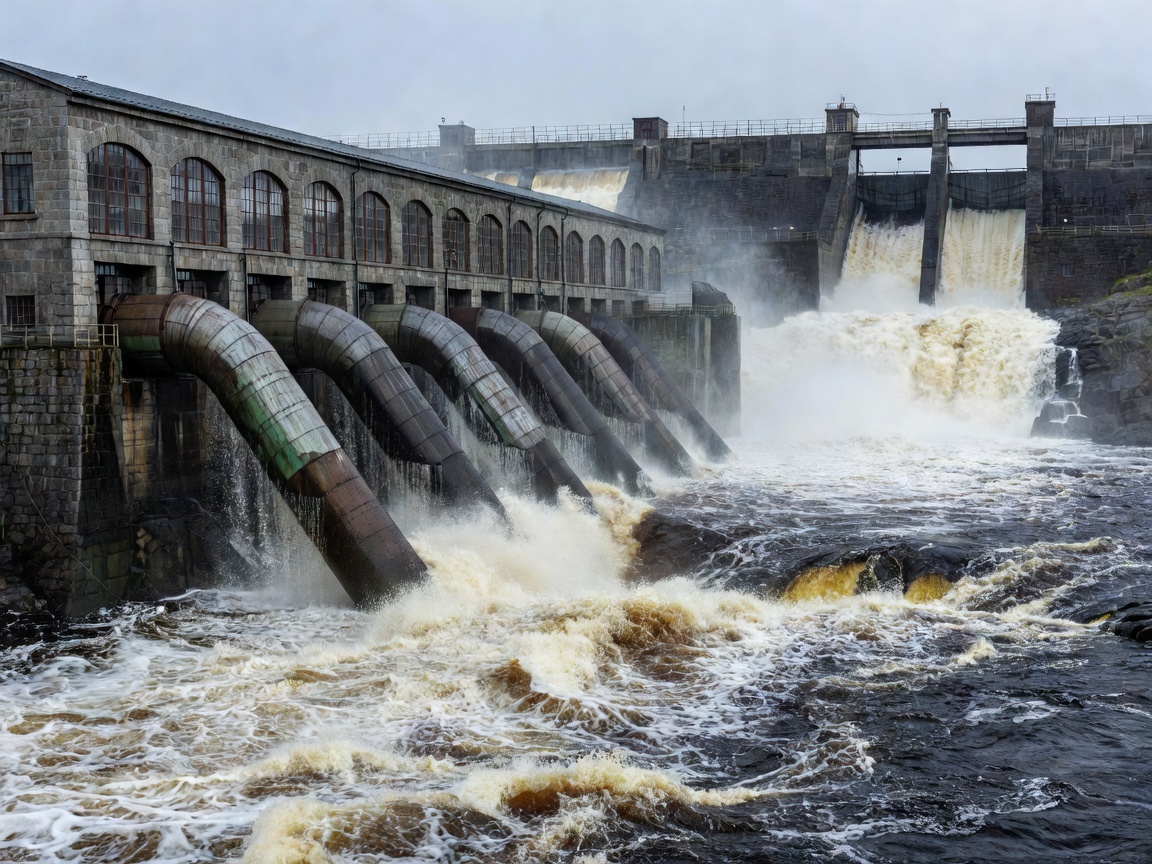 Industrial Dynamo
Harnessing White Coal: Modern Hydro Generation
The monumental discharge of the lower Glomma transformed it into the engine room of Norwegian industrialization in the late 19th and early 20th centuries, providing clean baseload power for electrometallurgy and cellulose production.
Electrification: The Era of Clean Hydro Power
Beginning in the 1890s, engineers recognized that the immense volumetric drop at cataracts such as Hafslund, Borregaard, Kykkelsrud, and Vamma could generate unprecedented electrical power. Industrial enterprises formed around these natural falls, turning Sarpsborg into one of the country's preeminent manufacturing capitals.
The power station at Kykkelsrud, completed in 1903, was regarded as an international engineering marvel. Unlike high-head alpine dams that rely on water falling thousands of feet from high reservoirs, the Glomma stations utilize run-of-the-river Kaplan and Francis turbines that handle tremendous volumetric throughput with relatively modest hydraulic heads (10 to 30 metres).
Evolution of Industry Along the Glomma
| Epoch | Dominant River Activity | Key Technological Driver | Socio-Economic Impact |
|---|---|---|---|
| 1600s – 1850s | Water-driven sawmills, manual log driving | Upright water saws (oppgangssag) | Creation of early merchant dynasties in Fredrikstad |
| 1861 – 1950s | Organized industrial timber floating | Fetsund boom systems, steam tugs | Mass seasonal employment for rural farming communities |
| 1898 – 1970s | Heavy industrial electrification & pulp mills | Run-of-river turbines, paper mills (Borregaard) | Rapid urbanization of Sarpsborg and Fredrikstad |
| 1985 – Present | Hydro generation, cultural preservation, angling | Automated hydro turbines, highway transport | Ecological monitoring and industrial museum operations |
Fortifications and Strategic Frontier History
Beyond economic resource extraction, the Glomma served as Norway's premier eastern defensive moat against Swedish incursions during centuries of Scandinavian conflicts. The Glomma basin boasts two of Norway’s most prominent military installations:
Kongsvinger Fortress: Situated high on a granite ridge over the river's bend, this 17th-century star-fortress guarded the direct overland invasion approach to Christiania (modern-day Oslo). Its cannons overlooked the river crossings, ensuring no foreign army could cross the Glomma unmolested.
Fredrikstad Fortress (Gamlebyen): At the river's mouth, the fortified old town of Fredrikstad is Northern Europe’s most impeccably preserved Renaissance fortress town. Surrounded by water-filled moats fed directly from the Glomma, its earthen ramparts and stone bastions defended the river mouth and southern Norway from naval assault.